


Sector: Digital-led organisation
Project Context
A mid sized organisation was investing across several performance channels, including search, social, and email.
Spend had increased over time, but the relationship between media cost and commercial return was unclear.
Different teams owned different platforms, reporting was fragmented, and no single view of performance existed.
The objective of the audit was to create a clear, prioritised understanding of how the account really worked:
where money was being made, where it was being wasted, and which changes would deliver the highest impact in the shortest time.
Note: This case study anonymises the organisation due to commercial sensitivity. The strategic approach and outcomes are fully represented.
Services:
Commercial Problem
Four issues limited the effectiveness of existing activity:
- No unified measurement framework
Each channel reported in its own way. Some focused on clicks, some on in-platform conversions, and others on last-click revenue.
This made it difficult to compare performance or defend budget decisions. - Mixed intent and audience structures
Campaigns blended different stages of the funnel.
High intent users, repeat customers, and cold prospects were often targeted in the same structures, diluting signals and increasing cost. - Weak connection between media and landing experience
Several high spend campaigns sent traffic to generic pages that did not match search intent or creative messaging, reducing conversion probability. - Limited visibility on incremental impact
Reporting focused on platform-reported results rather than business outcomes.
It was unclear which activity was genuinely adding incremental revenue and which was simply claiming credit.
Strategic Approach – Audit Framework
The audit followed a structured framework designed to move from fragmented views to a single, decision-ready picture.
1. Measurement And Data Quality
- Reviewed GA4 configuration, including events, conversions, and ecommerce tracking where present.
- Checked tag management, consent handling, and internal traffic filters for consistency.
- Mapped how each platform recorded conversions and compared this to real business outcomes.
2. Account Structure And Intent Segmentation
- Analysed search and social account structures to understand how intent, audiences, and geographies were grouped.
- Identified where high intent queries or segments were mixed with exploratory traffic.
- Highlighted duplication, keyword overlap, and campaigns competing in the same auctions.
3. Creative, Messaging, And Offer Alignment
- Reviewed ad copy, creative, and extensions against actual user problems and motivations.
- Assessed consistency between ads, landing pages, and on-site messaging.
- Logged gaps where offers were unclear, generic, or misaligned with the traffic being bought.
4. Landing Experience And Funnel
- Audited key landing pages for speed, clarity, and hierarchy.
- Checked whether each campaign had a clearly defined next step and single, obvious call to action.
- Documented friction points such as unnecessary form fields, distractions, or missing reassurance.
5. Economics, Bidding, And Budget Allocation
- Reviewed current bidding strategies and how they related to the quality of tracking signals.
- Analysed spend distribution by campaign, audience, and funnel stage.
- Compared current cost levels against realistic customer value and margin assumptions.
From Findings To Actions
The audit did not end at diagnostics. All findings were translated into a prioritised action plan, ranked by impact and effort:
- 1Foundations first – fix tracking gaps and define core conversions so bidding strategies could rely on clean data.
- 2Intent-led restructuring – separate high intent, mid funnel, and prospecting activity into distinct campaigns with aligned landing pages.
- 3Creative and offer updates – clarify value propositions and adapt messaging to each stage of the funnel.
- 4Budget reallocation – shift spend towards campaigns with proven incremental impact and away from low value, overlapping activity.
clear approach
Audit Framework

project outcome
Unified measurement and optimisation framework

Outcome
The audit delivered three practical outcomes for the organisation:
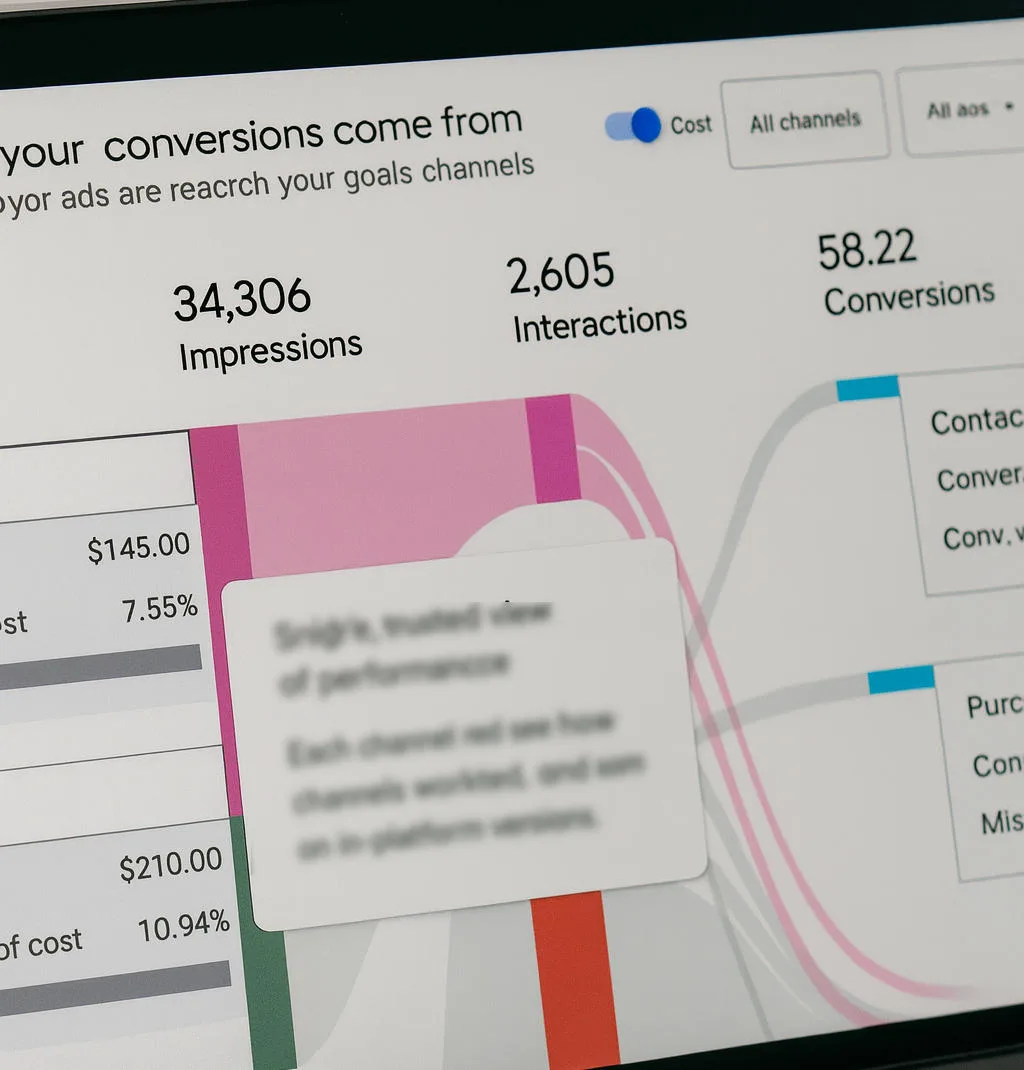
- Single, trusted view of performance
Leadership could see how channels worked together, which metrics mattered, and where value was really created. - Clear roadmap for restructuring and optimisation
The team received a step-by-step plan covering tracking fixes, account changes, landing improvements, and testing priorities. - Stronger link between spend and commercial results
Budget decisions could now be made based on contribution to revenue and margin, not platform-level impressions or clicks.
The organisation moved from a fragmented, channel-first view of performance to a unified measurement and optimisation framework that can support long-term growth.
Clear Approach
Project Outcome
related projects